Commercial carpet installation: direct glue-down broadloom & carpet tile
Floors and more, we’ll get you laid right.
Large carpet packages for offices, multifamily corridors, hospitality and commercial interiors — priced clearly, prepped properly and installed to the manufacturer’s requirements.
Direct glue-down broadloom carpet
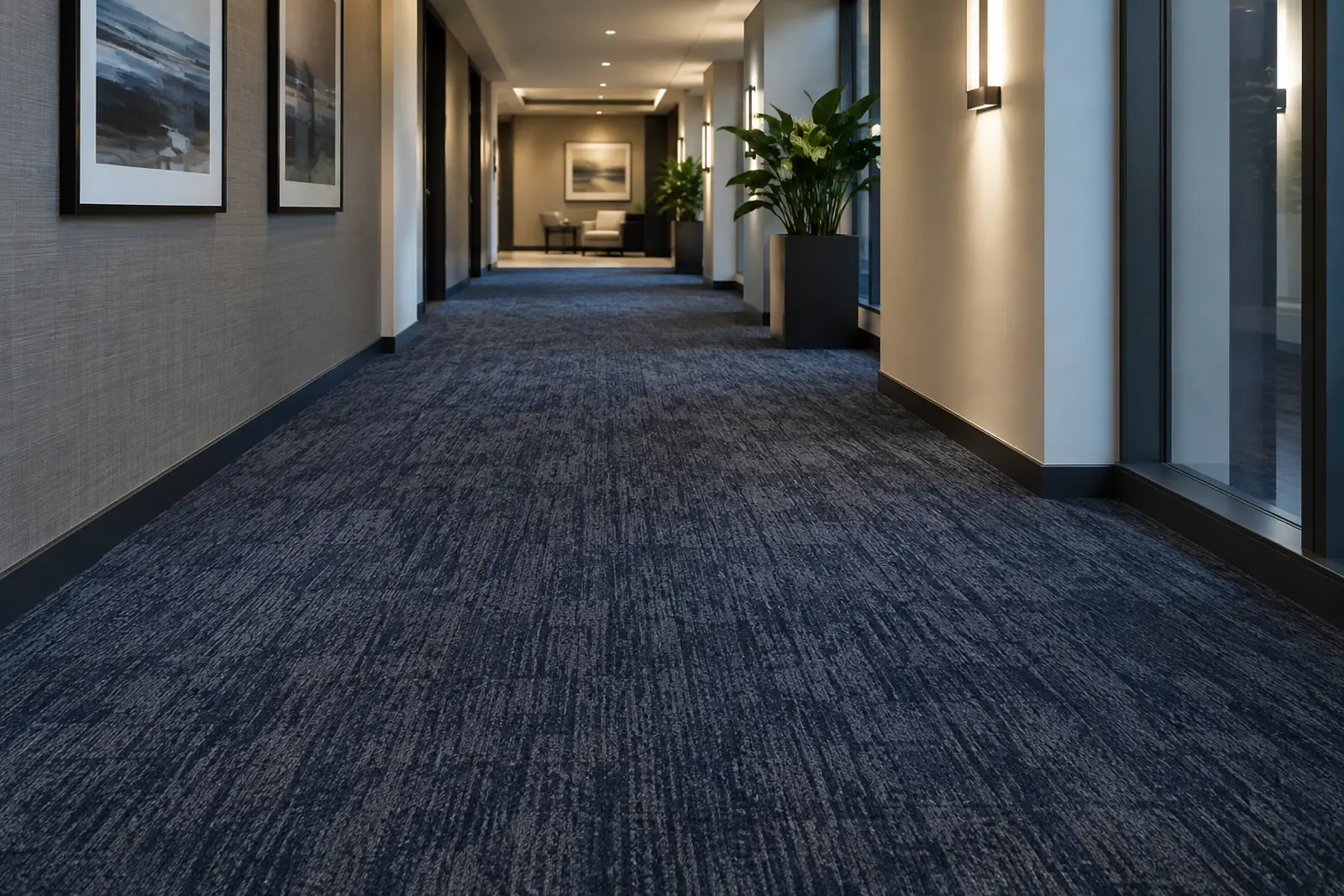
Commercial broadloom — also called roll goods or roll carpet — comes in 12-foot (and sometimes wider) rolls and is adhered directly to the slab with a full spread of adhesive. With no separate cushion, it stays flat under rolling loads like carts and chairs and is the standard choice for long corridors, multifamily hallways, hotel floors and large open areas.
- Seam layout planned to minimize visible seams and keep pattern match tight
- Adhesive selected and spread per the carpet manufacturer’s requirements
- Clean finish at walls with the specified base, and proper transitions to adjacent flooring
Double glue-down (double-stick)
When the spec calls for more comfort or acoustic performance, a cushion is glued to the floor and the carpet glued to the cushion — keeping glue-down stability with a softer feel underfoot.
Commercial carpet tile (carpet squares)
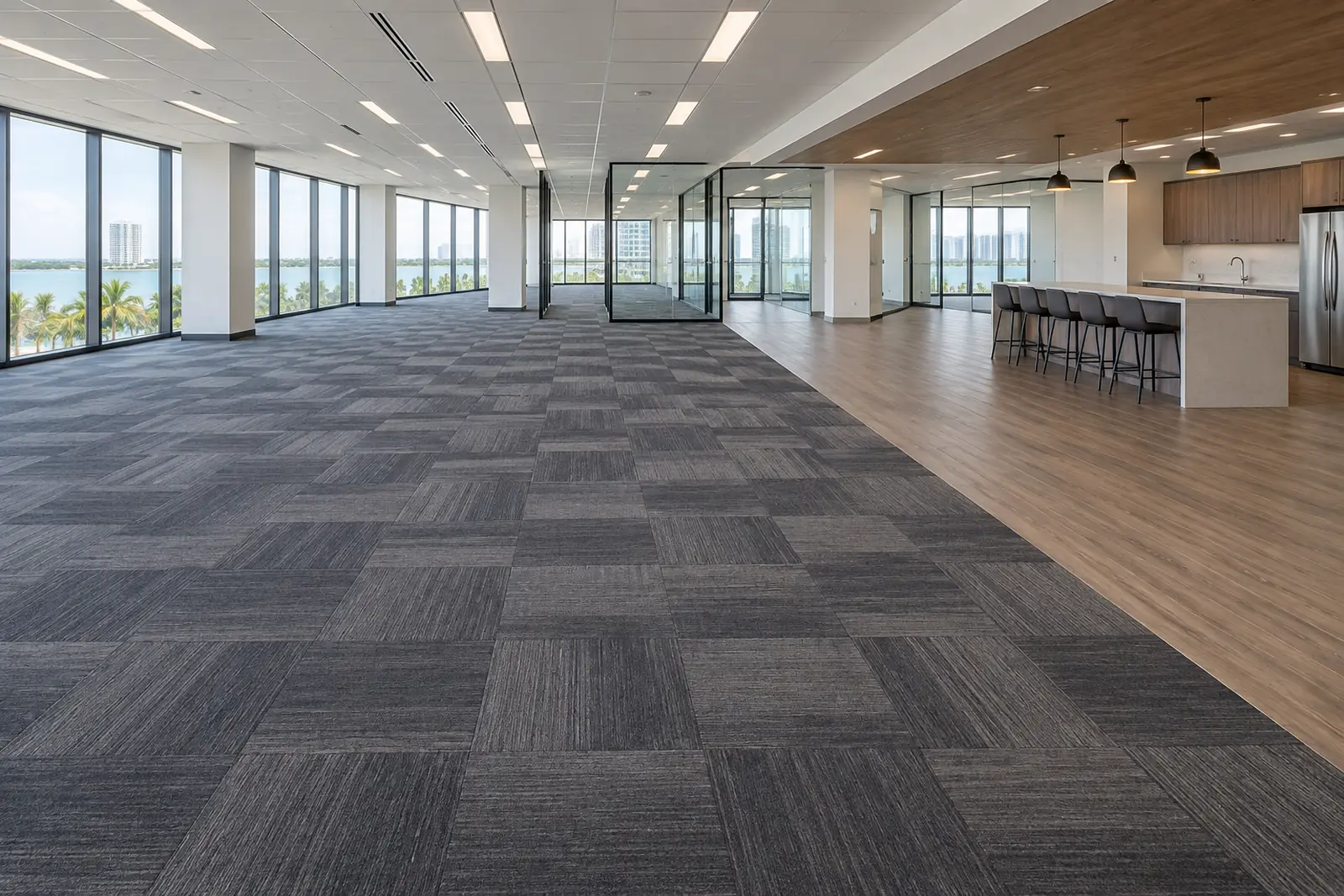
Modular carpet tile — 24×24 squares, planks and other formats — is the workhorse of modern offices. Damaged tiles can be replaced individually, installation can be phased around occupants and furniture, and layouts create very different looks from the same product.
- Layouts: monolithic, quarter-turn, ashlar (half-drop), brick, or the designer’s pattern
- Adhesive: pressure-sensitive tackifier or the manufacturer’s connector system
- Attic stock: extra tiles from the same dye lot for future replacement
Broadloom vs. carpet tile at a glance
| Factor | Direct glue-down broadloom | Carpet tile |
|---|---|---|
| Look | Seamless, continuous field; strong for patterns and long runs | Modular; layouts (quarter-turn, ashlar, brick) change the look |
| Best fit | Corridors, multifamily hallways, hospitality, large open areas | Offices, phased or occupied spaces, areas likely to need spot replacement |
| Repairs | Patched or seamed in sections | Swap individual tiles from attic stock |
| Installation | Full-spread adhesive, seaming and pattern matching | Tackifier or connectors; easier to work around furniture |
| Waste | Driven by roll width, room shape and pattern repeat | Typically lower; depends on layout and cuts |
Floor prep and moisture: where glue-down jobs succeed or fail
Florida slabs and high humidity make moisture the number-one risk for glue-down carpet and carpet tile. We address it before installation, not after a failure.
Moisture & pH testing
Adhesive and flooring manufacturers set slab limits. Testing — such as in-situ relative humidity per ASTM F2170 — and pH checks are scoped in the proposal when the project calls for it.
Patching & leveling
Cracks, low spots and rough concrete telegraph through glue-down goods. Prep quantities are identified during the scope review.
Old flooring & adhesive
Tear-out, disposal and old-adhesive removal or encapsulation are priced as their own line items so nothing is hidden.
What to send for an accurate carpet number
- Floor plan or finish plan with carpet areas marked, and the finish schedule
- Carpet spec section (09 68 13 Tile Carpeting / 09 68 16 Sheet Carpeting) or product and color
- Existing flooring to remove, base type, and any stairs, borders or insets
- Bid due date, schedule, and phasing or after-hours requirements
Get pricing on your carpet package.
Broadloom, carpet tile or both — tell us the square footage and attach the plans or finish schedule if you have them.
- Direct glue-down & double glue-down
- Carpet tile in any layout
- Tear-out, prep and base priced line by line
Request commercial carpet pricing
Takes about a minute. Add your bid date and carpet product in the scope notes.
Thanks — your request is in.
Your reference number is . A member of our team will review the details and reach out by phone or email.
Large plan set or more photos? Reply to our follow-up and we’ll send a link for the full set.
Commercial carpet FAQ
Is broadloom or carpet tile better for a commercial office?
Carpet tile is usually easier for offices with furniture systems, phased work or a need to replace damaged areas, because individual tiles can be swapped. Direct glue-down broadloom gives a seamless look and is often chosen for long corridors, multifamily hallways and hospitality spaces. Product cost, layout, traffic and the design intent drive the final choice — we’ll price both if you’re undecided.
What is direct glue-down carpet?
Direct glue-down means commercial broadloom (roll) carpet is adhered straight to the subfloor with a full spread of adhesive, with no separate cushion. It resists wrinkling and rolling-load movement, which is why it’s common in corridors and high-traffic commercial areas.
What is double glue-down (double-stick) carpet?
In a double glue-down installation, a cushion is glued to the floor and the carpet is then glued to the cushion. It adds comfort and acoustic performance while keeping the stability of a glue-down system. It’s used when the specification calls for it.
How are commercial carpet tiles installed?
Carpet tile is typically installed with a pressure-sensitive (tackifier) adhesive or the manufacturer’s connector system, in a monolithic, quarter-turn, ashlar or brick layout. The manufacturer’s installation instructions determine the adhesive and method required for warranty.
What affects the cost of commercial carpet installation?
The main drivers are the carpet product, square footage and layout, tear-out and disposal of existing flooring, floor preparation and moisture mitigation, pattern matching and seams, stairs or borders, base and transitions, phasing or after-hours work, and access. We price these line by line so you can compare apples to apples.
Can new carpet be installed over old adhesive?
Sometimes. It depends on the old adhesive type, its condition and what the new flooring manufacturer allows. Some adhesives must be removed or encapsulated before new glue-down goods go in. We assess this during the scope review and include it in the proposal.